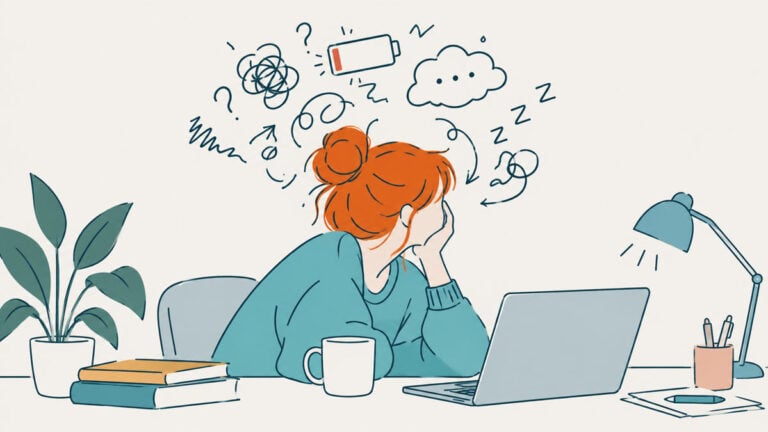
Why Do I Replay Conversations Over and Over? Understanding Rumination

Mind Health Group Team
10.21.26
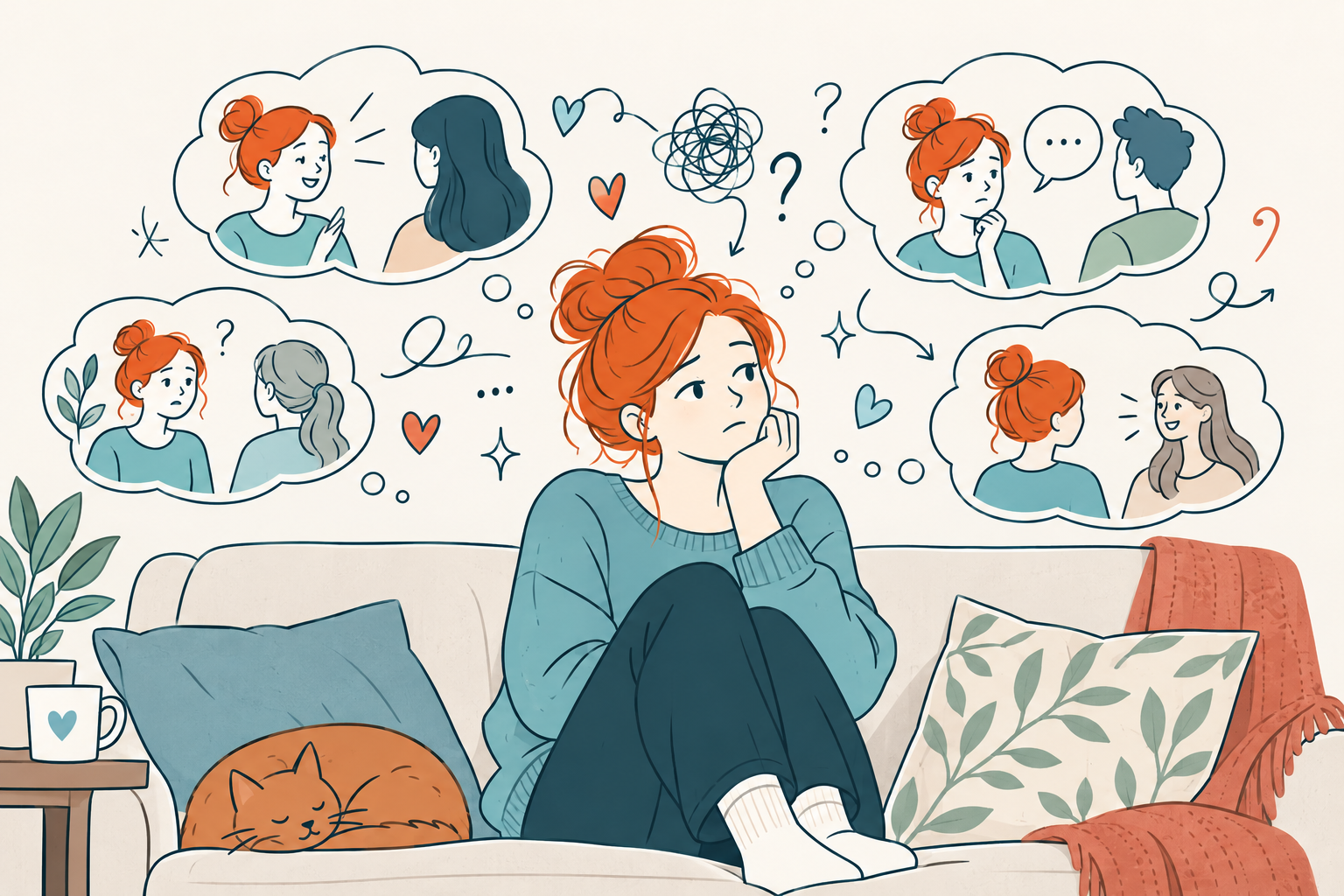
Have you ever walked away from a conversation feeling perfectly fine, only to spend the next few hours questioning everything you said?
Maybe you made a joke that didn’t land the way you expected. Maybe someone’s response felt a little different than usual. Or perhaps you keep thinking about something you wish you had said differently.
Before you know it, you’re replaying the entire interaction in your head.
Did I say something wrong?
Did I make things awkward?
What if they misunderstood me?
Even when there’s no clear reason to worry, your mind keeps returning to the same moment, searching for something you might have missed.
If this sounds familiar, you may be experiencing something called rumination.
Rumination is a common thinking pattern that can leave you feeling anxious, emotionally drained, and stuck in your own head. Understanding why it happens is often the first step toward learning how to let those thoughts go.
What Is Rumination?
Rumination is the habit of repeatedly thinking about the same situation, memory, or concern without reaching a helpful conclusion.
Unlike healthy reflection, which allows us to learn from experiences and move forward, rumination tends to keep us focused on what went wrong, what could have happened, or what someone else might be thinking.
For example, after a conversation with a coworker, you might find yourself wondering whether your tone sounded rude. You replay their facial expressions, analyze their response, and imagine different ways the interaction could have gone.
The more you think about it, the more uncertain you feel.
That’s what makes rumination so frustrating. It often feels like you’re trying to solve a problem, but instead of finding an answer, you end up with more questions.
According to the American Psychological Association, repetitive, self-critical thinking is commonly associated with anxiety and depression.
And while everyone occasionally overthinks a conversation, frequent rumination can begin to affect your emotional well-being.
Why Do I Keep Replaying Conversations in My Head?
There’s rarely one simple explanation for why we replay conversations.
Sometimes it comes from wanting to make a good impression. Other times, it may be connected to anxiety, self-doubt, past experiences, or a fear of being misunderstood.
Here are a few common reasons your mind might struggle to let an interaction go.
1. You’re Worried About How Others Perceive You
Most of us care about what other people think to some degree. We want to be liked, understood, and accepted.
But when that concern becomes overwhelming, even ordinary conversations can feel like something you need to review afterward.
You might question whether you talked too much, shared too little, or said something embarrassing.
This can be especially common among people who experience social anxiety, where fear of judgment or embarrassment can make social interactions feel more stressful than they need to be.
2. You Have a Hard Time With Uncertainty
One of the most uncomfortable parts of a conversation is that we can’t always know what someone else is thinking.
Maybe a friend took longer than usual to respond to your message. Maybe your manager seemed distracted during a meeting.
Your mind may start filling in the blanks with negative possibilities.
Are they upset with me? Did I do something wrong?
Rumination can become an attempt to find certainty in a situation where certainty simply isn’t available.
Unfortunately, analyzing every detail rarely provides the reassurance you’re looking for.
3. You Hold Yourself to High Standards
If you’re someone who wants to say the right thing, make everyone comfortable, or avoid disappointing others, you may be more likely to replay conversations afterward.
Perfectionism doesn’t always look like wanting everything to be flawless.
Sometimes it looks like expecting yourself to handle every interaction perfectly.
You might criticize yourself for not responding quickly enough, saying something awkward, or failing to express exactly what you meant.
But conversations are human. They’re spontaneous, imperfect, and sometimes a little messy.
You don’t have to get every word right to have a meaningful connection with someone.
4. Past Experiences Have Made You More Cautious
Sometimes, replaying conversations is connected to experiences where you felt criticized, rejected, embarrassed, or misunderstood.
If you’ve been hurt by someone’s reaction in the past, you may become more alert to the possibility of it happening again.
Your mind might review interactions as a way of trying to protect you from future discomfort.
Although this pattern can feel protective, constantly searching for signs that something went wrong can make everyday relationships feel more stressful.
5. You’re Already Experiencing Stress or Anxiety
When you’re overwhelmed, your mind may have a harder time moving away from upsetting thoughts.
A conversation you might normally forget within minutes can suddenly feel much more significant.
Stress, poor sleep, and ongoing anxiety can make repetitive thinking more difficult to manage.
If you’ve noticed that your thoughts become harder to quiet during stressful periods, there may be a connection.
For a closer look at how everyday overthinking differs from anxiety, read our article on Anxiety vs. Overthinking: How to Know When It’s More Than Stress.
Is Replaying Conversations a Sign of Anxiety?
Not necessarily.
Replaying a conversation occasionally is a normal part of being human. We all reflect on things we’ve said, especially when an interaction feels important or uncomfortable.
However, frequent rumination can be associated with anxiety, particularly when your thoughts focus on possible mistakes, negative judgments, or situations you can’t control.
You may notice patterns such as:
- Repeatedly analyzing conversations long after they’ve ended.
- Assuming someone is upset with you without clear evidence.
- Feeling embarrassed about interactions that seemed ordinary at the time.
- Seeking reassurance that you didn’t say anything wrong.
- Struggling to fall asleep because you’re thinking about past conversations.
- Avoiding social situations because you’re worried about how you’ll come across.
Rumination can also occur alongside depression, obsessive-compulsive symptoms, and other mental health concerns. Experiencing it does not automatically mean you have a mental health condition.
The important question is whether these thoughts are beginning to interfere with your daily life.
Rumination vs. Healthy Reflection: What’s the Difference?
Thinking about the past isn’t always unhealthy.
In fact, reflection can help us understand our emotions, improve relationships, and learn from our experiences.
The difference often comes down to whether your thoughts are helping you move forward or keeping you stuck.
Healthy reflection might sound like:
“I wish I had handled that conversation differently. Next time, I’ll try to communicate more clearly.”
Rumination might sound like:
“Why did I say that? They probably think I’m annoying. I always make things awkward. What if they never want to talk to me again?”
Healthy reflection creates an opportunity for growth.
Rumination often creates more self-doubt.
If you’ve been thinking about the same interaction repeatedly without gaining any new understanding, you may be caught in a rumination cycle.
How to Stop Replaying Conversations in Your Head
You can’t always prevent an uncomfortable thought from appearing.
But you can learn to change how you respond when your mind starts replaying the same moment.
Here are a few strategies that may help.
1. Recognize When You’re Ruminating
Sometimes, simply identifying what’s happening can help create a little distance between you and your thoughts.
The next time you notice yourself replaying a conversation, try acknowledging it without judgment.
I’m replaying that conversation again because I’m feeling uncertain.
You don’t have to immediately make the thought disappear.
The goal is to recognize the pattern rather than automatically follow it.
2. Ask Yourself Whether the Thought Is Helpful
When you’re caught in a cycle of overthinking, try asking yourself:
Is there something I can actually do about this situation?
If you realize you said something hurtful, you may be able to apologize or clarify what you meant.
But if you’re repeatedly guessing what someone thinks of you, there may be nothing to resolve.
Learning to recognize the difference between a problem you can address and uncertainty you need to tolerate can help reduce rumination.
3. Challenge Your Assumptions
When we feel anxious, it’s easy to treat our worries as facts.
For example:
“They seemed quiet today. They must be upset with me.”
But what else could explain their behavior?
Maybe they were tired. Maybe they had something on their mind. Maybe they weren’t thinking about the conversation at all.
Try reminding yourself that a thought isn’t necessarily evidence that something is wrong.
You don’t have to force yourself to think positively. Simply allowing room for other explanations can make a situation feel less overwhelming.
4. Bring Your Attention Back to the Present
Rumination tends to pull your attention into the past.
Grounding techniques can help reconnect you with what’s happening right now.
You might try taking a short walk, focusing on your breathing, or using the 5-4-3-2-1 grounding technique:
- Identify five things you can see.
- Notice four things you can feel.
- Listen for three things you can hear.
- Identify two things you can smell.
- Notice one thing you can taste.
These exercises won’t necessarily stop every repetitive thought, but they can help shift your attention away from the mental replay.
5. Practice Being Kinder to Yourself
Think about how you would respond if a close friend told you they were embarrassed about something they said.
Would you analyze every word and point out everything they could have done differently?
Probably not.
You’d likely remind them that everyone has awkward moments and that one conversation doesn’t define who they are.
Try offering yourself that same understanding.
You are allowed to stumble over your words, misunderstand something, or have an interaction that doesn’t go exactly as planned.
Being human means being imperfect.
And that’s okay.
6. Give Yourself Permission to Move On
Sometimes, we keep thinking about a conversation because we believe we need to understand every detail before we can let it go.
But closure doesn’t always come from finding an answer.
Sometimes it comes from accepting that you may never know exactly what someone else was thinking.
You can care about how you treat people without taking responsibility for every reaction they have.
You can learn from a conversation without continuing to relive it.
And you can move forward even when a little uncertainty remains.
For more practical strategies, explore our guide on How to Stop Rumination and Overthinking.
When Does Rumination Become a Mental Health Concern?
Occasional overthinking is common. But when repetitive thoughts become difficult to control, they can take a toll on your mental health.
You may benefit from additional support if rumination is:
- Interfering with your sleep or concentration.
- Making social interactions feel overwhelming.
- Affecting your relationships or confidence.
- Contributing to ongoing anxiety or sadness.
- Taking up significant portions of your day.
- Making it difficult to enjoy the present moment.
Rumination isn’t a diagnosis on its own, but it can be part of a larger pattern worth discussing with a mental health professional.
Treatments such as cognitive behavioral therapy (CBT) can help people recognize unhelpful thinking patterns and develop healthier ways of responding to them.
When rumination occurs alongside a condition such as anxiety or depression, a psychiatric evaluation may also help determine whether additional treatment, including medication when appropriate, could be beneficial.
You can learn more about anxiety symptoms and available treatments through the National Institute of Mental Health.
You Don’t Have to Believe Every Thought You Have
One of the hardest things about rumination is how convincing it can feel.
When you’ve replayed a conversation enough times, even a small moment can start to feel like a major mistake.
But just because your mind keeps returning to something doesn’t mean it’s as important or as negative as it feels.
Sometimes, a conversation was simply a conversation.
A pause was just a pause.
And something you said that felt awkward to you may not have stood out to anyone else.
Learning to let go of repetitive thoughts takes practice. Some days will be easier than others.
The goal isn’t to never overthink again. It’s to reach a place where your thoughts don’t have to control how you feel about yourself.
Finding Support at Mind Health Group
If you constantly replay conversations, second-guess yourself, or feel exhausted by your own thoughts, you don’t have to wait until things become overwhelming to seek support.
At Mind Health Group, we understand how anxiety and repetitive thinking can affect your confidence, relationships, and everyday life.
Our mental health providers offer personalized psychiatric care, including evaluations and medication management when appropriate, through convenient virtual appointments.
Whether you’re dealing with persistent anxiety, overwhelming thoughts, or simply aren’t sure why your mind won’t slow down, we’re here to help you explore the next steps.
You deserve to feel more present in your life instead of constantly revisiting the past.
Get Started With Mind Health Group
Or call or text us at 248-471-7171 to learn more about your options.
Frequently Asked Questions About Rumination
Why do I replay conversations in my head after they happen?
Replaying conversations can happen for several reasons, including anxiety, self-consciousness, perfectionism, or fear of being judged. Your mind may be trying to understand an interaction or prevent future embarrassment. When this thinking becomes repetitive and unproductive, it’s often called rumination.
Is rumination the same as overthinking?
Rumination is a type of overthinking that typically focuses on past experiences, mistakes, or uncomfortable emotions. Overthinking is a broader term that can also include excessive worrying about the future.
Can social anxiety cause you to replay conversations?
Yes. People experiencing social anxiety may review conversations afterward because they’re concerned about being judged, embarrassed, or misunderstood. This pattern is sometimes called post-event processing.
How do I stop thinking about something embarrassing I said?
Start by recognizing when you’re replaying the situation. Consider whether there’s anything constructive you need to do, challenge assumptions about what others think, and gently redirect your attention to the present. Practicing self-compassion can also help reduce the urge to keep analyzing the moment.
Can rumination be treated?
Yes. Rumination can improve with approaches such as cognitive behavioral therapy, mindfulness-based strategies, and treatment of underlying mental health conditions when present. A mental health professional can help you identify the approaches best suited to your needs.