Can’t Sleep Because Your Mind Won’t Shut Off? Anxiety and Insomnia Explained

Mind Health Group Team
10.27.26
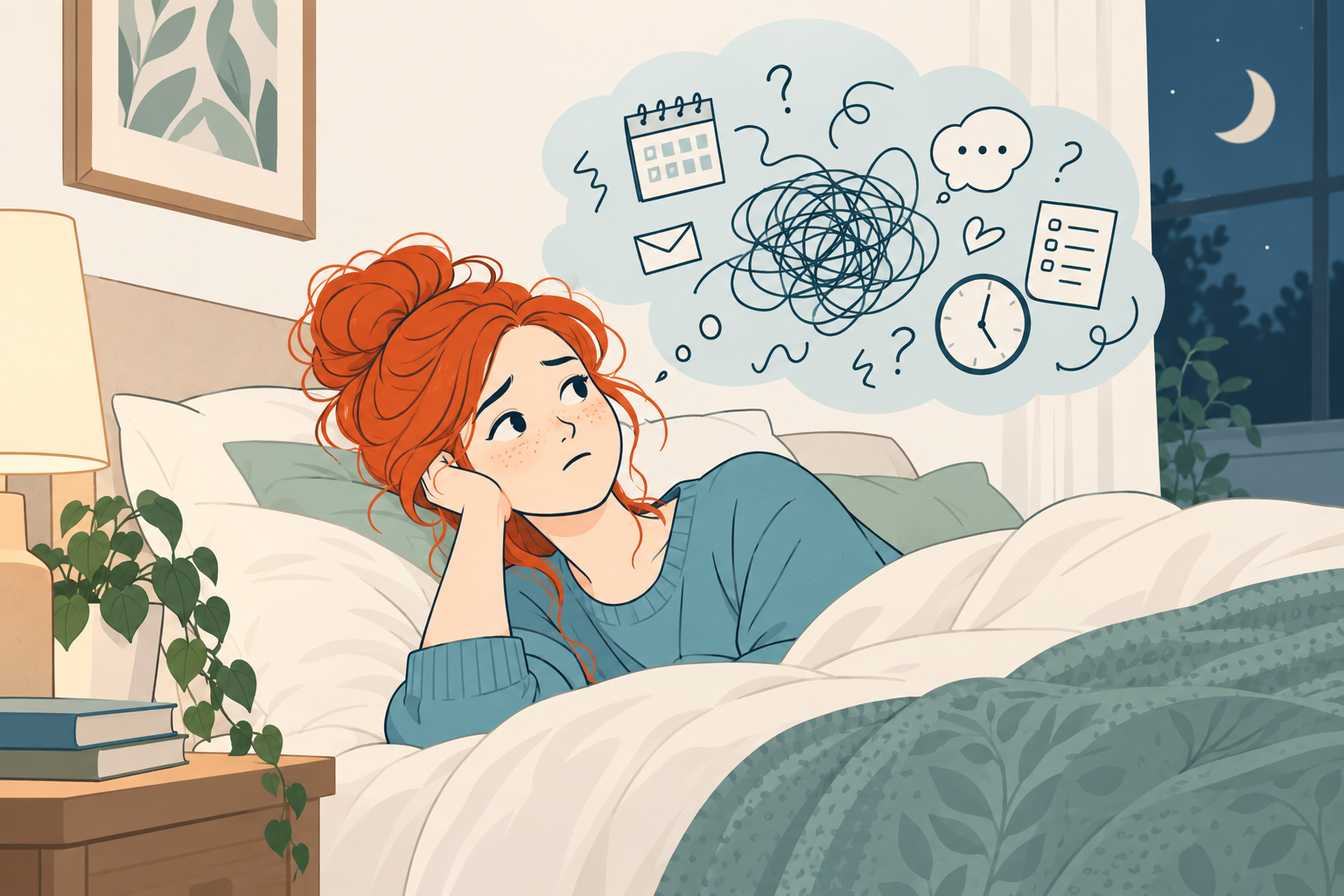
You’ve had a long day. You’re exhausted, your body is ready for bed, and all you want is a good night’s sleep.
But the moment your head hits the pillow, your mind decides it’s time to think about everything.
That awkward conversation from earlier. Tomorrow’s responsibilities. Something you forgot to do last week. And suddenly, you’re worrying about things that haven’t even happened yet.
Sound familiar?
If you’ve ever wondered, “Why can’t I sleep even though I’m exhausted?” you’re not alone. For many people, anxiety and sleep problems go hand in hand.
The good news? Understanding why your mind feels so active at night can be the first step toward getting better rest.
Why Does Anxiety Get Worse at Night?
During the day, there’s usually plenty to keep your mind occupied. Between work, family, errands, and everyday responsibilities, you might not have much time to sit with your thoughts.
But nighttime is different.
When everything gets quiet and the distractions disappear, worries you’ve pushed aside throughout the day can suddenly feel impossible to ignore.
You might find yourself:
- Replaying conversations and wondering if you said the wrong thing.
- Thinking about everything you need to accomplish tomorrow.
- Worrying about finances, relationships, or your health.
- Imagining worst-case scenarios that haven’t happened.
- Feeling anxious about not getting enough sleep.
Anxiety can also keep your body in a heightened state of alertness. Even when you’re physically tired, your nervous system may have trouble settling down.
It’s frustrating because you know you need sleep, but the harder you try to relax, the more awake you seem to feel.
The Connection Between Anxiety and Insomnia
Anxiety and insomnia can create a difficult cycle.
Anxiety makes it harder to fall asleep or stay asleep. Then, after a restless night, you may feel more overwhelmed, irritable, or anxious the following day.
By bedtime, you’re already worried about whether you’ll sleep.
And the cycle continues.
According to the National Institute of Mental Health, difficulty falling or staying asleep is a common symptom of generalized anxiety disorder.
But you don’t need to have a diagnosed anxiety disorder to experience sleep problems related to stress or worry.
Sometimes, a stressful period in your life is enough to disrupt your sleep.
What Is Insomnia?
Insomnia is more than occasionally having trouble falling asleep.
It’s a sleep disorder that can make it difficult to fall asleep, stay asleep, or get restful sleep, even when you have enough time to rest.
Insomnia may be short-term, lasting a few days or weeks, or become a longer-lasting problem.
Chronic insomnia generally involves sleep difficulties at least three nights per week for three months or longer.
And while anxiety can contribute to insomnia, other factors such as medications, medical conditions, sleep apnea, and lifestyle habits can also play a role.
Why Do I Overthink Everything Before Bed?
Overthinking at night often happens because your mind is trying to make sense of unfinished thoughts, emotions, or situations.
Maybe you’re mentally preparing for tomorrow. Maybe you’re revisiting something embarrassing. Or maybe you’re trying to solve a problem that doesn’t have an immediate answer.
It can feel productive, but repeatedly thinking about the same concerns rarely brings the relief you’re looking for.
This pattern is sometimes called rumination.
Rumination involves repeatedly focusing on thoughts, situations, or worries without necessarily moving toward a solution.
If this sounds familiar, you might also relate to our article about why we replay conversations over and over.
The important thing to understand is that having racing thoughts doesn’t mean you’re doing anything wrong.
Sometimes, your mind simply needs help learning when it’s okay to stop problem-solving and rest.
Signs Anxiety May Be Affecting Your Sleep
Not every restless night is caused by anxiety. However, certain patterns may suggest that stress or worry is playing a role.
You might notice:
- Racing thoughts: Your mind jumps from one worry to another when you try to sleep.
- Difficulty relaxing: Your body feels tense, restless, or uncomfortable even when you’re exhausted.
- Waking up anxious: You wake during the night and immediately begin worrying.
- Feeling tired but wired: You’re physically drained but mentally alert.
- Worrying about sleep itself: You start stressing about how many hours of sleep you’ll get.
- Daytime exhaustion: Poor sleep leaves you feeling irritable, unfocused, or emotionally overwhelmed.
If these experiences sound familiar, it may be worth paying closer attention to how your mental health and sleep habits are connected.
6 Ways to Calm Your Mind Before Bed
You can’t always control which thoughts show up at night, but there are ways to create a more relaxing environment for your mind and body.
1. Give Yourself Time to Wind Down
Going straight from a busy day into bed doesn’t always give your mind enough time to settle.
Try creating a simple bedtime routine that helps you transition out of the day’s responsibilities.
This might include taking a warm shower, reading a book, listening to calming music, or dimming the lights.
It doesn’t need to be elaborate. Even a few quiet moments can help signal that the day is coming to an end.
2. Write Down What’s on Your Mind
If your thoughts tend to spiral at night, try getting them out of your head and onto paper.
Write down what’s worrying you, what you need to remember tomorrow, or anything that feels unfinished.
You don’t need to solve everything right then.
Sometimes, simply acknowledging your thoughts and knowing you can revisit them tomorrow can make them feel less overwhelming.
3. Try Slow Breathing or Grounding Exercises
When anxiety makes your body feel tense or restless, calming exercises may help you feel more settled.
Try breathing in gently for four seconds, then breathing out slowly for six seconds.
Repeat for a few minutes without forcing your breathing.
You can also try grounding yourself by noticing the feeling of your blanket, the sounds around you, or the sensation of your body resting against the mattress.
The goal isn’t to force yourself to fall asleep. It’s to give your mind something gentle to focus on instead of your worries.
4. Limit Late-Night Scrolling
It’s tempting to reach for your phone when you can’t sleep.
But scrolling through social media, checking emails, or reading stressful news can make it harder to unwind.
Try putting your phone away before bed and choosing something less stimulating instead.
If you use your phone for relaxing music or guided meditation, consider keeping the screen off while you listen.
5. Stop Watching the Clock
We’ve all done it.
You look at the clock and realize it’s already midnight. Then 1 a.m. Then 2 a.m.
Suddenly, you’re calculating how little sleep you’ll get before your alarm goes off.
Unfortunately, worrying about lost sleep can make it even harder to relax.
Try turning your clock away and resisting the urge to check the time.
If you’ve been awake for a while and feel frustrated, consider getting out of bed and doing something quiet in dim lighting until you feel sleepy again.
6. Be Gentle With Yourself
One of the most frustrating parts of anxiety-related sleep problems is feeling like you’re failing at something that should come naturally.
But sleep isn’t something you can force.
Instead of telling yourself, “I have to fall asleep right now,” try reminding yourself that you’re giving your body an opportunity to rest.
Not every night will be perfect, and that’s okay.
Small, consistent changes can help you build a healthier relationship with sleep over time.
When Should You Seek Help for Anxiety and Sleep Problems?
Everyone has an occasional restless night.
But if anxiety and poor sleep are becoming part of your everyday life, it may be time to talk with a mental health professional or healthcare provider.
Consider reaching out if:
- You’re regularly struggling to fall asleep or stay asleep.
- Your worries feel difficult to control.
- Poor sleep is affecting your mood, concentration, or relationships.
- You feel exhausted throughout the day.
- You’ve tried changing your sleep habits without much improvement.
- You’re beginning to dread bedtime because you expect another sleepless night.
You don’t have to wait until your symptoms become severe to ask for support.
Treatment may include therapy, changes to sleep habits, or medication when appropriate.
For persistent insomnia, cognitive behavioral therapy for insomnia (CBT-I) is generally recommended as a first-line treatment. It helps address the thoughts and behaviors that can keep sleep difficulties going.
If anxiety is contributing to your sleep problems, treating that anxiety may also be an important part of feeling better.
How Mind Health Group Can Help
At Mind Health Group, we understand that anxiety doesn’t always show up as panic attacks or obvious feelings of fear.
Sometimes, it looks like lying awake at night, overthinking every conversation, or feeling exhausted before your day even begins.
Our mental health providers can help you better understand your symptoms and explore treatment options that fit your needs.
Depending on your situation, care may include mental health assessments, talk therapy, or prescription and medication management.
We offer convenient mental health care options, including virtual psychiatry, so getting support can fit more easily into your life.
You deserve more than just getting through another sleepless night.
If anxiety is making it difficult to rest, we’re here to help you take the next step.
Get Started with Mind Health Group
Frequently Asked Questions About Anxiety and Insomnia
Can anxiety cause insomnia?
Yes. Anxiety can make it difficult to fall asleep, stay asleep, or feel rested. Racing thoughts, excessive worry, and physical tension may interfere with your ability to relax at bedtime.
Why does my mind race when I try to sleep?
At night, there are often fewer distractions competing for your attention. This can make unresolved worries, stressful thoughts, or anxious feelings more noticeable. Stress-related alertness can also make it difficult for your mind and body to settle.
How do I stop overthinking at night?
Creating a calming bedtime routine, writing down your thoughts, practicing slow breathing, and limiting stimulating activities before bed may help. If overthinking regularly interferes with sleep, speaking with a mental health professional may also be beneficial.
Can lack of sleep make anxiety worse?
Yes. Poor sleep can affect emotional regulation, concentration, and your ability to cope with everyday stress. Anxiety can also disrupt sleep, creating a cycle that may become difficult to break without support.
Should I see a therapist or psychiatrist for anxiety-related insomnia?
That depends on your symptoms and individual needs. Therapy may help you manage anxiety and unhelpful thought patterns, while a psychiatric provider can assess whether medication or other treatment is appropriate. Persistent insomnia may also benefit from specialized CBT-I and a medical evaluation to identify other possible causes.
This article is for educational purposes and is not a substitute for professional medical advice, diagnosis, or treatment.