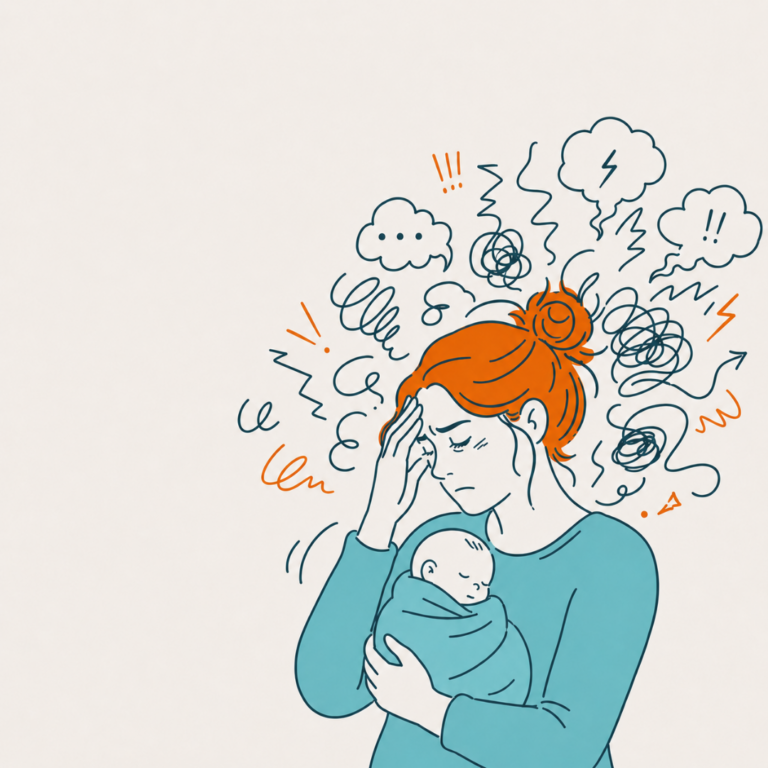
Can You Have Postpartum Depression Months After Giving Birth?

Mind Health Group Team
05.26.26

Understanding Postpartum Depression Beyond the “Baby Blues”
Most people associate postpartum depression (PPD) with the first few weeks after giving birth. But the reality is that postpartum depression can appear months later — even after you’ve settled into life with your new baby and adjusted to your routine as a parent.
While the “baby blues” are common and usually fade within two weeks after delivery, postpartum depression is more serious and longer-lasting. PPD can develop anytime within the first year after childbirth, and symptoms may gradually build over time before you realize something deeper is happening.
Can You Develop Postpartum Depression Months Later?
Yes — postpartum depression can absolutely develop months after giving birth.
Many parents are surprised when depressive symptoms appear long after the newborn stage. You may wonder, “Why am I feeling this way now? Shouldn’t I be past this already?” But late-onset postpartum depression is more common than many people realize.
Several factors can contribute to postpartum depression months later, including:
- Hormonal changes
- Chronic sleep deprivation
- Stress from parenting responsibilities
- Returning to work
- Relationship changes
- Weaning from breastfeeding
- Lack of emotional support
In some cases, postpartum depression goes unnoticed because parents spend months in “survival mode,” pushing through exhaustion and emotional overwhelm until their mental and physical health can no longer keep up.
Signs of Late-Onset Postpartum Depression
Postpartum depression symptoms can look different for everyone, but common signs include:
- Persistent sadness or emotional numbness
- Irritability, anger, or mood swings
- Feeling disconnected from your baby or partner
- Changes in appetite or sleep unrelated to your baby’s schedule
- Constant guilt or feeling like you’re failing as a parent
- Difficulty concentrating or making decisions
- Racing thoughts or excessive worry
- Anxiety that feels impossible to calm
- Panic attacks or intrusive thoughts
- Loss of interest in activities you once enjoyed
It’s important to know that postpartum depression is not always just “feeling sad.” Many parents also experience postpartum anxiety, overwhelming fear, or intrusive thoughts that can feel frightening and isolating.
Why Postpartum Depression Often Goes Undiagnosed
Late-onset postpartum depression is often missed because it doesn’t fit the timeline many people expect.
Friends, family members, and even parents themselves may assume symptoms are simply caused by exhaustion, stress, or adjusting to parenthood. You might hear things like:
- “You look fine.”
- “Every parent is tired.”
- “You should be past the hard part by now.”
But mental health recovery after childbirth doesn’t follow a strict schedule. Physical healing, hormonal shifts, emotional adjustment, and the demands of parenting can affect your mental well-being for many months after delivery.
When to Seek Help for Postpartum Depression
If you’ve been feeling anxious, emotionally drained, disconnected, or persistently low for weeks or months after giving birth, it may be time to seek support.
Postpartum depression is real, valid, and treatable — no matter when symptoms begin.
The earlier you reach out for help, the sooner you can begin feeling more balanced, supported, and like yourself again.
You Don’t Have to Go Through This Alone
Whether you gave birth a few weeks ago or nearly a year ago, support is available. Seeking help is not a sign of failure — it’s a sign that you’re taking care of yourself and your family.
At Mind Health Group, we provide compassionate, personalized postpartum mental health support to help you feel calm, connected, and in control again.
If you or a loved one may be experiencing postpartum depression, contact Mind Health Group today to learn more about your treatment and support options.