
Burnout vs. Depression: How to Tell the Difference

Mind Health Group Team
08.07.26
Last Updated: November 23, 2026
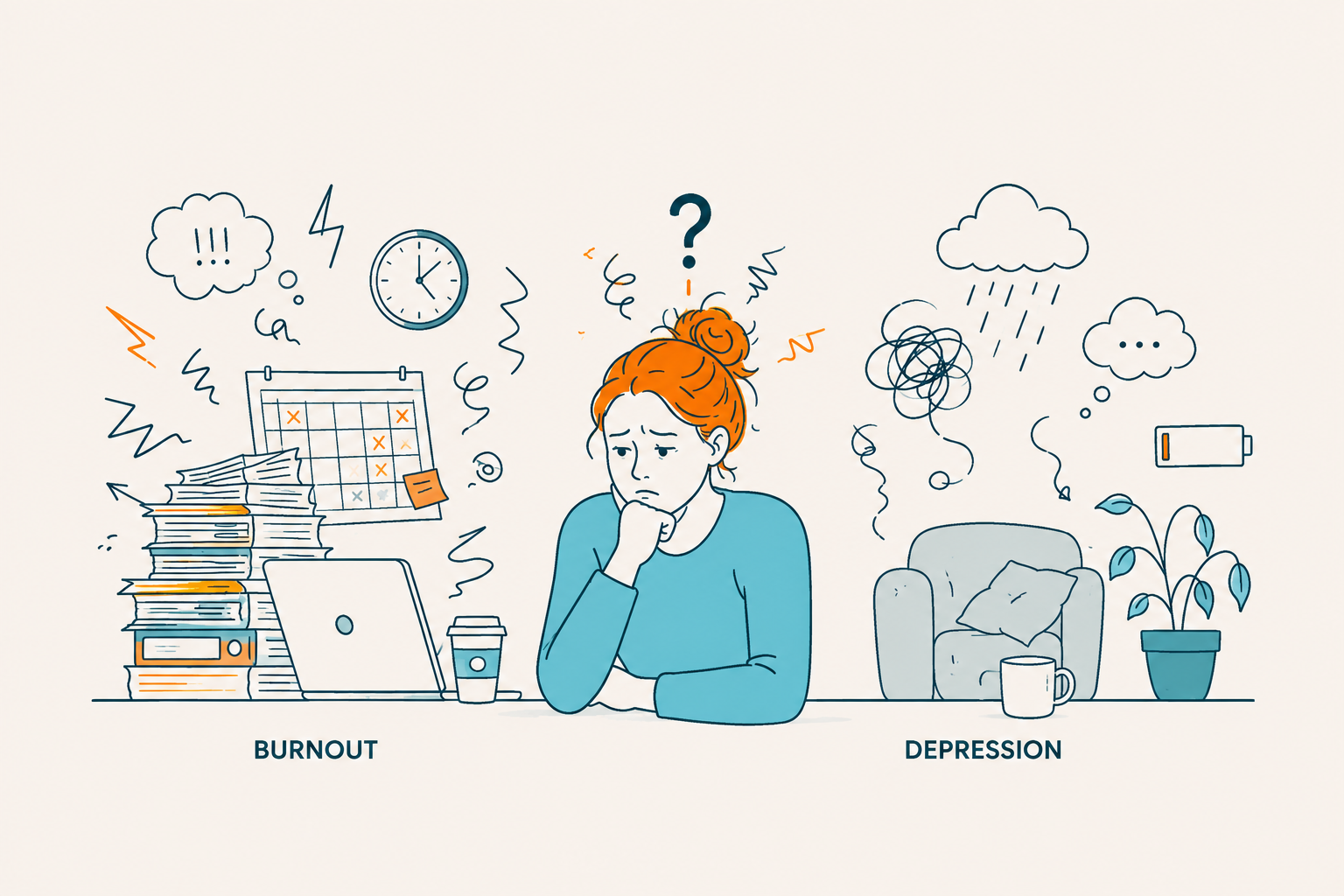
Feeling constantly exhausted, emotionally drained, or unmotivated? You may be wondering whether you’re experiencing burnout, depression, or simply going through a stressful period.
Although burnout and depression share similar symptoms, they are not the same. Both can affect your energy, concentration, motivation, and overall well-being, making it difficult to recognize what’s happening.
Understanding the differences between burnout vs depression can help you recognize when additional support may be beneficial.
What Is Burnout?
Burnout is commonly described as a state of physical, mental, and emotional exhaustion associated with prolonged stress.
According to the World Health Organization (WHO), burnout is specifically an occupational phenomenon resulting from chronic workplace stress that has not been successfully managed. It is not classified as a medical condition.
While people may also use the term “burnout” to describe exhaustion related to caregiving, parenting, school, or other responsibilities, the WHO’s formal definition applies specifically to workplace stress.
Common Signs and Symptoms of Burnout
Burnout can affect people differently, but common signs include:
- Feeling physically or emotionally exhausted
- Difficulty concentrating or completing tasks
- Feeling disconnected from work
- Increased frustration, irritability, or cynicism
- Reduced motivation and productivity
- Feeling overwhelmed by everyday responsibilities
- Feeling less effective or accomplished at work
Burnout can develop gradually, making it difficult to recognize until exhaustion begins interfering with daily life.
What Is Depression?
Depression is a mental health condition that affects how a person feels, thinks, and functions. Unlike burnout, depression may affect multiple areas of life, even when someone is away from work or other stressful environments.
Depression can develop with or without an identifiable trigger. Symptoms of major depression generally occur most of the day, nearly every day, for at least two weeks.
Common Signs and Symptoms of Depression
Symptoms may include:
- Persistent sadness, emptiness, or hopelessness
- Loss of interest in activities previously enjoyed
- Ongoing fatigue or low energy
- Difficulty concentrating or making decisions
- Changes in sleep patterns
- Changes in appetite or weight
- Feelings of guilt or worthlessness
- Increased irritability or restlessness
- Withdrawing from relationships or social activities
- Thoughts of death or suicide
Not everyone experiences depression in the same way. Some individuals may experience emotional numbness or irritability rather than noticeable sadness.
Burnout vs. Depression: What Are the Key Differences?
The biggest difference between burnout and depression is often how symptoms relate to stress and how broadly they affect someone’s life.
| Burnout | Depression |
|---|---|
| Associated with chronic workplace stress | Can develop with or without an identifiable stressor |
| Often involves exhaustion and negative feelings about work | Can involve persistent sadness, emptiness, or hopelessness |
| May improve when workplace stress is reduced | May continue even when external stress decreases |
| Often involves feeling less effective professionally | May involve feelings of worthlessness or excessive guilt |
| Primarily relates to the occupational environment | Can affect work, relationships, hobbies, and everyday activities |
These differences are general patterns, not diagnostic rules. Burnout and depression can overlap, and a person may experience both simultaneously.
Does Rest Help Burnout or Depression?
Taking breaks, improving sleep, and reducing stress may help individuals experiencing burnout.
However, rest alone may not resolve depression. Depression often requires a more comprehensive approach that may include psychotherapy, medication, or a combination of treatments.
If you’re taking time to rest but continue feeling emotionally exhausted, disconnected, or hopeless, consider speaking with a healthcare professional.
Can Burnout Lead to Depression?
Burnout and depression are closely related, but burnout does not automatically develop into depression.
Prolonged workplace stress and emotional exhaustion may contribute to mental health difficulties, including depressive symptoms. However, the relationship is complex, and experiencing burnout does not mean someone will develop a depressive disorder.
Recognizing ongoing stress and seeking support early can help protect your mental well-being.
Am I Burned Out or Depressed?
If you’re unsure whether you’re experiencing burnout or depression, consider how your symptoms affect different parts of your life.
Ask yourself:
- Do I primarily feel exhausted or disconnected when thinking about work?
- Do I still enjoy activities outside of my responsibilities?
- Does my mood improve when I have time away from stressful situations?
- Have I lost interest in activities I previously enjoyed?
- Have my symptoms lasted two weeks or longer?
- Are my symptoms affecting my relationships, daily responsibilities, or ability to care for myself?
These questions can help you reflect on your experiences, but they cannot determine a diagnosis.
A qualified healthcare professional can evaluate your symptoms and help identify whether you’re experiencing depression, work-related burnout, another health concern, or a combination of factors.
How to Manage Burnout and Support Your Mental Health
Although burnout and depression may require different approaches, certain strategies can support overall mental well-being.
1. Prioritize Rest and Recovery
Make space for meaningful rest whenever possible. Maintaining consistent sleep habits and taking breaks can help support your physical and emotional health.
2. Establish Healthy Boundaries
Recognizing your limits and communicating your needs may help reduce ongoing stress. This could include adjusting workloads, setting realistic expectations, or protecting personal time.
3. Stay Connected With Others
Supportive relationships can help reduce feelings of isolation. Consider reaching out to trusted friends, family members, or community resources.
4. Make Time for Activities You Enjoy
Whether it’s listening to music, spending time outdoors, practicing mindfulness, or engaging in a favorite hobby, meaningful activities can support emotional well-being.
5. Consider Professional Mental Health Support
If emotional exhaustion, persistent sadness, or changes in motivation are interfering with everyday life, professional support may help.
Treatment for depression may include psychotherapy, medication management, or a combination of approaches based on individual needs.
When Should You Seek Help for Burnout or Depression?
You don’t have to wait until your symptoms become overwhelming to seek support.
Consider reaching out to a healthcare professional if you experience:
- Persistent emotional exhaustion
- Sadness or hopelessness lasting two weeks or longer
- Loss of interest in everyday activities
- Difficulty managing daily responsibilities
- Changes in sleep, appetite, or concentration
- Symptoms that continue despite reducing stress
If you are experiencing thoughts of suicide or self-harm, call or text 988 to reach the Suicide & Crisis Lifeline. In an immediate life-threatening emergency, call 911.
Mental Health Support in Michigan: How Mind Health Group Can Help
At Mind Health Group, we understand that persistent stress, emotional exhaustion, and depression can affect your quality of life.
Our psychiatric providers offer convenient, compassionate telehealth mental health care to individuals throughout Michigan.
Through comprehensive psychiatric evaluations and personalized treatment plans, our team can help you better understand your symptoms and explore appropriate care options, including medication management when clinically indicated.
Whether you’re experiencing symptoms of depression, anxiety, or ongoing emotional exhaustion, we’re here to help you take the next step toward better mental health.
Getting started is easier than you think.
Connect with Mind Health Group to learn more about our virtual psychiatric services in Michigan.
Frequently Asked Questions About Burnout and Depression
How do I know if I’m burned out or depressed?
Burnout is typically associated with ongoing workplace stress, while depression can affect multiple areas of your life, including relationships, hobbies, and everyday activities. Because symptoms can overlap, a mental health professional can help identify what you’re experiencing.
Can you have burnout and depression at the same time?
Yes. Burnout and depression can occur together. Someone experiencing prolonged workplace stress may also develop depressive symptoms, making professional evaluation especially helpful.
Is burnout a mental health disorder?
No. The World Health Organization classifies burnout as an occupational phenomenon rather than a medical condition. However, burnout can significantly affect emotional well-being and may coexist with mental health conditions.
Can burnout go away on its own?
Some people experience improvement after reducing workplace stress, establishing healthier boundaries, and allowing time for recovery. However, persistent or worsening symptoms may require additional support.
Should I see a psychiatrist for burnout or depression?
If you’re experiencing persistent sadness, emotional exhaustion, loss of interest, or difficulty functioning, a psychiatric evaluation may help determine whether depression or another mental health condition is contributing to your symptoms. Mind Health Group offers virtual psychiatric care throughout Michigan.