
Burnout vs. Depression: How to Tell the Difference

Candyce Wilson
08.07.26
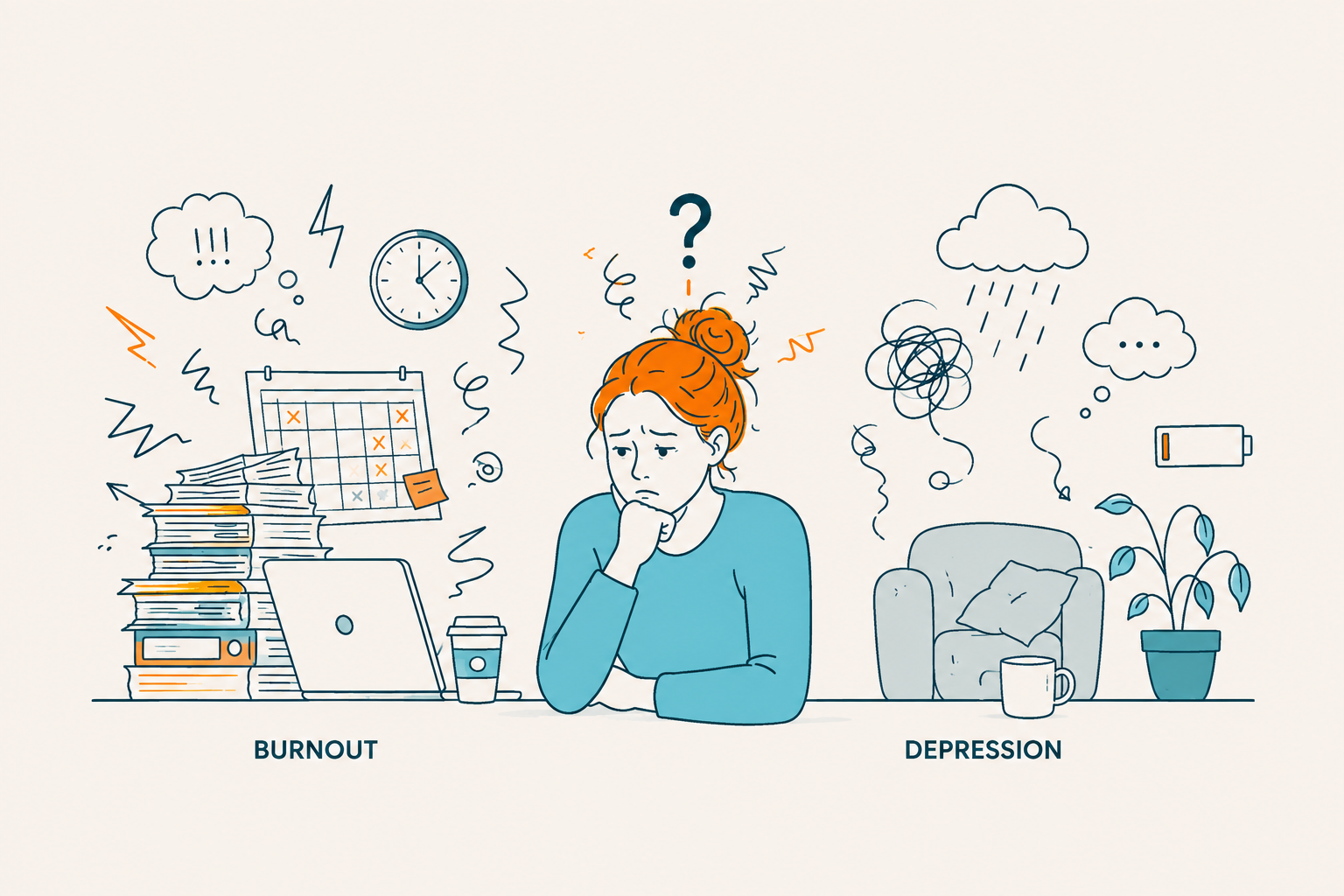
Is It Depression or Just Burnout? How to Tell the Difference
If you’ve been feeling exhausted, emotionally drained, and struggling to get through the day, you may be wondering whether you’re experiencing burnout or depression. While these conditions share several symptoms, they have different causes, treatments, and recovery paths. Understanding the difference is the first step toward finding the right support.
What Is Burnout?
Burnout is a state of physical, mental, and emotional exhaustion caused by prolonged stress. It is commonly associated with work, caregiving responsibilities, academic pressures, or chronic life stressors.
Burnout develops gradually and often occurs when someone feels overwhelmed, overextended, and unable to keep up with ongoing demands.
Common Signs of Burnout
- Constant fatigue or exhaustion
- Feeling overwhelmed
- Reduced motivation
- Increased irritability
- Difficulty concentrating
- Feeling detached from work or responsibilities
- Decreased productivity
Common Causes of Burnout
Burnout can happen for many reasons, including:
- Heavy workloads
- Caregiving responsibilities
- Parenting stress
- Financial pressure
- Lack of work-life balance
- Workplace conflict
- Unrealistic expectations
- Chronic stress without time to recover
Many people experiencing burnout still find enjoyment in hobbies, social activities, or time away from their stressors.
What Is Depression?
Depression is a mental health condition that affects how a person thinks, feels, and functions. It can impact every aspect of daily life, including work, relationships, sleep, appetite, and overall well-being.
Unlike burnout, depression is not always tied to a specific source of stress.
Common Symptoms of Depression
- Persistent sadness or emptiness
- Loss of interest in activities once enjoyed
- Feelings of hopelessness
- Low energy
- Changes in sleep patterns
- Changes in appetite
- Difficulty concentrating
- Feelings of worthlessness or guilt
Symptoms typically last for at least two weeks and may continue for months without treatment.
Burnout vs. Depression: Key Differences
Example:
| Burnout | Depression |
|---|---|
| Usually caused by chronic stress | May occur with or without a clear cause |
| Often improves with rest | Usually doesn’t improve with rest alone |
| Primarily affects work or caregiving | Affects all areas of life |
| Motivation returns after recovery | Loss of interest often persists |
| Emotional exhaustion | Persistent sadness or numbness |
Burnout Often Has a Clear Cause
Burnout is usually connected to ongoing chronic stress from work, caregiving, school, or other responsibilities.
Depression can develop with or without an obvious trigger.
Does Burnout Improve With Rest?
People experiencing burnout may notice improvement after taking time off, setting boundaries, or reducing stress.
Depression often persists even when stressful situations improve.
Depression Affects More Areas of Life
Burnout tends to center around a specific area, such as work or caregiving.
Depression can affect every aspect of daily functioning, including relationships, hobbies, self-care, and overall enjoyment of life.
Loss of Interest Is More Common in Depression
People experiencing burnout may still look forward to spending time with loved ones or engaging in activities they enjoy.
With depression, there is often a significant loss of interest or pleasure in activities that once felt meaningful.
Can Burnout Lead to Depression?
In some cases, yes.
When burnout goes unaddressed for a long period of time, chronic stress can take a serious toll on mental health. Emotional exhaustion, ongoing stress, and feeling overwhelmed can increase the risk of developing depression.
This is why early intervention is so important.
When Should You Seek Help?
Burnout has become increasingly common, with workplace surveys consistently showing that many employees report symptoms of emotional exhaustion and chronic stress. Depression also remains one of the most common mental health conditions, affecting millions of adults each year.
If your symptoms are affecting your quality of life, relationships, work performance, or ability to complete daily tasks, it may be time to seek professional support.
Consider reaching out if you experience:
- Persistent sadness
- Ongoing emotional exhaustion
- Loss of interest in activities
- Difficulty functioning day to day
- Feelings of hopelessness
- Symptoms that are not improving
Other Symptoms to Look Out For
- Brain fog
- Trouble making decisions
- Feeling emotionally numb
- Cynicism
- Frequent headaches
- Muscle tension
You do not have to wait until things become overwhelming to ask for help.
Strategies for Managing Burnout and Depression
While treatment plans vary from person to person, some helpful strategies may include:
Prioritize Rest
Quality sleep and regular breaks can help support mental wellness.
Set Healthy Boundaries
Learning to say no and protecting your time can reduce chronic stress.
Stay Connected
Social support can play an important role in emotional well-being.
Practice Mindfulness
Meditation and mindfulness techniques may help reduce stress and improve emotional resilience.
Seek Professional Care
A mental health professional can help identify whether you’re experiencing burnout, depression, or both and recommend appropriate treatment options.
How Mind Health Group Can Help
At Mind Health Group, we understand that emotional exhaustion, stress, and low mood can impact every area of life. Our providers offer compassionate telehealth psychiatric care designed to help individuals better understand their symptoms and create personalized treatment plans.
Whether you’re struggling with burnout, depression, anxiety, or ongoing stress, support is available.
You Don’t Have to Figure It Out Alone
If you’re unsure whether you’re experiencing burnout, depression, or both, you don’t have to figure it out alone. The providers at Mind Health Group offer personalized telehealth psychiatric evaluations and treatment plans to help you better understand your symptoms and move toward feeling like yourself again.
FAQ
Can burnout turn into depression?
Yes. Long-term burnout and chronic stress may increase the risk of developing depression if left untreated.
Can you have burnout and depression at the same time?
Yes. Some people experience both simultaneously. A mental health professional can help determine what is contributing to your symptoms.
Is burnout considered a mental illness?
Burnout is not classified as a mental health disorder. It is a response to prolonged stress. However, it can significantly affect mental health and may contribute to anxiety or depression.
How long does burnout last?
Recovery varies depending on the individual and the source of stress. Some people improve after making lifestyle changes, while others benefit from professional treatment.
Should I see a psychiatrist for burnout?
If symptoms are persistent, interfere with daily life, or you think depression or anxiety may also be present, seeking professional evaluation is a good idea.