The Power of Gratitude

Mind Health Group Team
07.07.26
The Power of Gratitude: How Practicing Gratitude Can Improve Your Mental Health
Introduction
Fortunately, there’s a simple yet powerful practice that can help shift our perspective: practicing gratitude.
Gratitude is more than just saying “thank you” or acknowledging the good things in your life. It’s a mindset: a conscious choice to focus on the positive, even amid life’s challenges. Research consistently shows that practicing gratitude can have a profound impact on mental health, emotional well-being, and overall quality of life.
The Science Behind Gratitude and Mental Health
Gratitude isn’t just a “feel-good” concept. It has measurable effects on the brain and body. Studies have found that gratitude activates areas of the brain associated with happiness, reward, and motivation. It also encourages the production of key neurotransmitters such as serotonin and dopamine, which play an important role in regulating mood and emotional well-being.
Reduces Stress and Anxiety
Research also suggests that gratitude may help lower cortisol levels, the body’s primary stress hormone, which can improve our overall response to stress and help us feel calmer and more grounded.
Boosts Mood and Encourages Positivity
Regularly practicing gratitude encourages us to notice the positive moments in our daily lives, from a meaningful conversation with a friend to the beauty of a sunset. Over time, these moments help counterbalance negative emotions and foster a greater sense of emotional well-being.
Start a Gratitude Journal
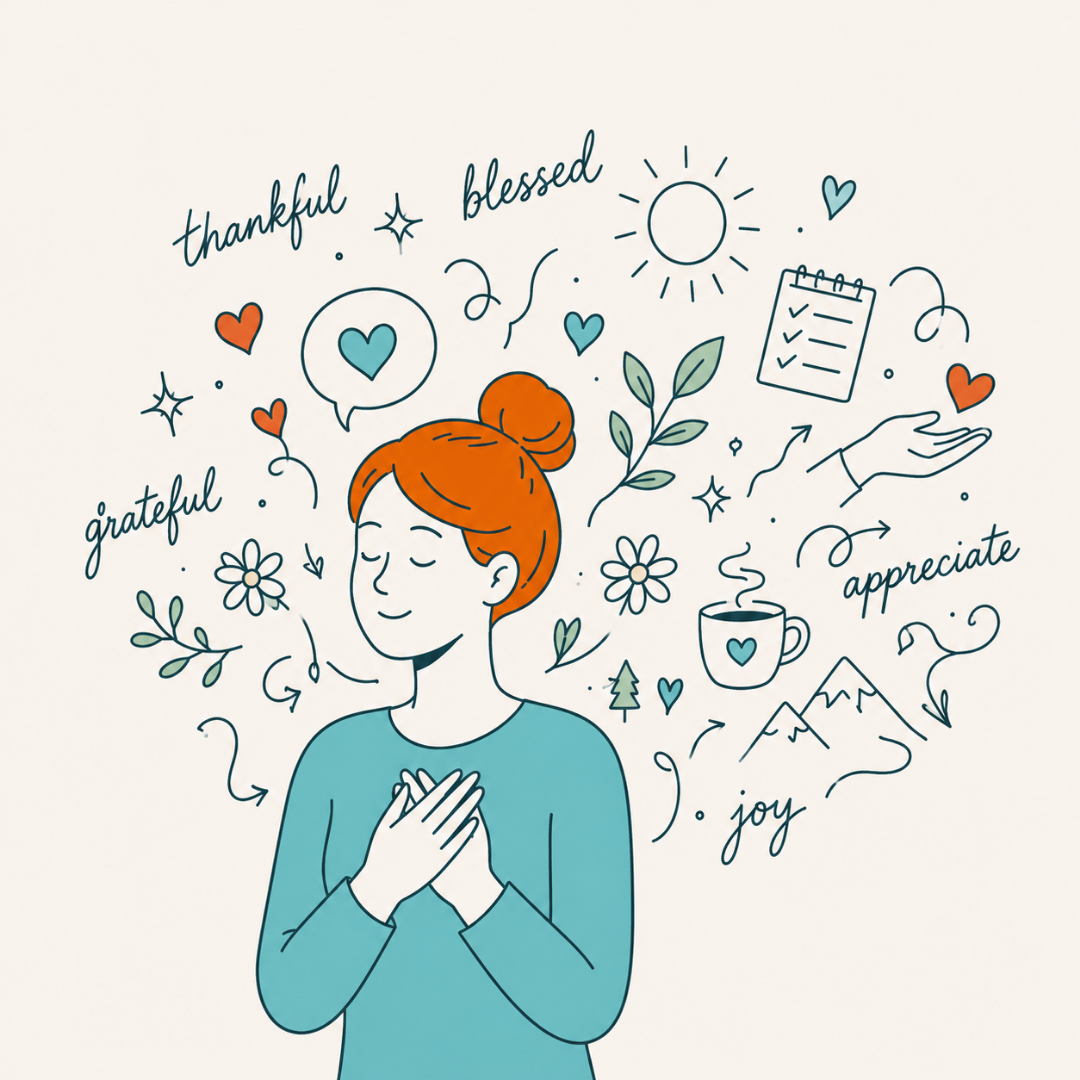
Set aside a few minutes each day, either in the morning or before bed, to write down a few things you’re grateful for. These can be significant aspects of your life, such as your health, family, or career, or smaller moments, like a good cup of coffee, a kind gesture, or a favorite song.
Practice Gratitude Meditation
Find a quiet place to sit comfortably and take a few deep breaths. Then, bring your attention to people, experiences, or aspects of your life that you appreciate. As you reflect, try to connect with the feelings associated with gratitude: warmth, peace, joy, and contentment.
Conclusion
The good news is that gratitude doesn’t require a major lifestyle change. Small daily practices, such as keeping a gratitude journal, expressing appreciation to others, or taking a few moments to reflect on positive experiences, can have a meaningful impact on your overall well-being.
At MindHealthGroup, we believe that small, intentional habits can have a meaningful impact on mental well-being. Through educational resources, professional support, and community-focused care, we help people navigate life’s challenges with confidence and resilience.
If you’re looking for personalized support, book an appointment with one of our experienced mental health professionals.
Reviewed by the MindHealthGroup Team